※This article is a reprint of a tie-up article edited and produced by Mynavi News.
Viling is developing unique initiatives centered on supporting children with developmental challenges, including the AI-powered assessment tool "co-mii" for children with developmental disorders. Under the philosophy of "creating a society overflowing with passion," the company is focusing on education that cultivates critical thinking and developmental support that expands future choices. We spoke with Ms. Nakamura and Mr. Waki, who are responsible for "co-mii," about their creative efforts and challenges in the field, the organizational culture that supports employee initiatives, and the appeal of their careers.
Hinata Nakamura
Manager, Business Promotion Group
Developmental Support Division
Viling, Inc.
Kota Waki
Manager, Sales Group
Developmental Support Division
Viling, Inc.
A Role Spanning from Planning to Fieldwork, Broadening Children's Futures
―― Please tell us about your current job responsibilities.
Hinata: I am in the Business Promotion Group of the Developmental Support Division, where I am responsible for the planning and development of teaching materials for children with developmental disorders, and a system for diagnosing children's characteristics and creating support plans. In addition to providing teaching materials, I also manage services that teachers can utilize for support, so I am broadly involved from development to operation.
Kota: I also work in the Sales Group of the same Developmental Support Division. I am responsible for sales activities to introduce the services that Nakamura plans and develops to as many welfare facilities as possible.
―― Could you share the values that you prioritize in the field?
Kota: One is the concept of "Shu-Ha-Ri." This involves first adhering to the traditional form (Shu), then adapting and innovating based on understanding (Ha), and finally transcending the form to create something new (Ri). The other is a concept I learned from a senior colleague: "Self-Reliance, Self-Driving, Self-Thinking." We value this posture of self-discipline, acting independently, and thinking for oneself.
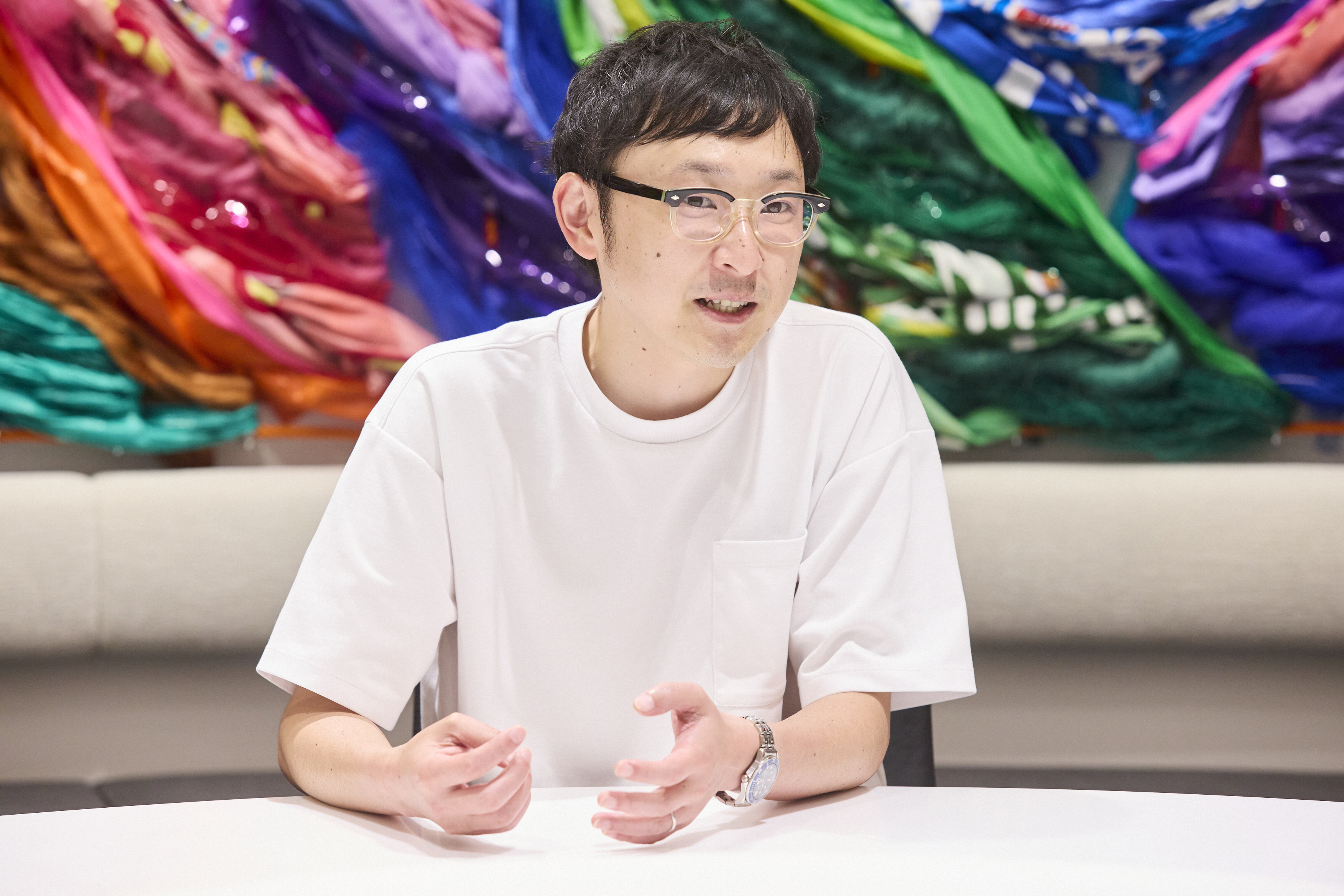
Hinata: As someone who drives the business, I strive for quick and thorough responses. I act with the mindset of picking up any tasks or issues that might be left unresolved or whose person in charge is unclear.
―― How do you think Viling's core values, "education that cultivates critical thinking" and "developmental support that expands future choices," connect to your work?
Hinata: I feel that our product itself is directly linked to our philosophy. Promoting a business that provides support tools so children can receive assistance tailored to their characteristics is what leads to the realization of our philosophy.
Kota: I also believe that delivering the services designed by Nakamura and others to as many people as possible constitutes support that broadens children's futures. I am convinced that this will have a positive impact on their future.
AI Therapist "co-mii": The Challenge of Massive Support Logic and Intuitive UI
―― What kind of service is the AI Therapist "co-mii"?
Hinata: It is a service that analyzes the characteristics of a child with a developmental disorder and semi-automatically generates a support plan based on the results. It was released in October 2023.
―― Why did you decide to develop this service?
Hinata: We were originally providing a therapeutic education material called "Stem Box" to facilities that support children with disabilities. However, we received feedback from the facilities such as, "We don't know which material to use with which child," and "The work of creating support plans is complicated." The development of "co-mii" began to resolve these challenges.
―― If there were any difficulties during the development of "co-mii," please share them.
Hinata: The need to release it within a short period of six months meant that the speed was the most challenging aspect. It also took a significant amount of time to prepare around 500 types of support tasks corresponding to children's characteristics and link them based on logic.
Kota: We overcame the parts that required specialized knowledge by co-developing with companies that run therapeutic facilities and with therapy specialists. Also, since the welfare industry still has a strong analog culture, we struggled with designing the UI/UX so that anyone could operate it intuitively. Improvement work continues even after the release.
The Joy of Supporting Children's Changes: Feedback from the Field
―― What kind of feedback have you received from the field since introducing "co-mii"?
Hinata: The child's characteristics are displayed on a radar chart as a diagnostic result, and many people say they were able to reconfirm, "So this is where they struggle." While different staff members might focus on different points, we are delighted when they tell us that using "co-mii" has helped establish a common understanding among the staff.
Kota: The child's strengths and weaknesses are immediately visible in the graph, which makes it an excellent communication tool. Not only when talking to parents, but also when speaking with school or nursery teachers, they can discuss the child from a common perspective: "What is this child good at? Where are they struggling?" That is what has been most appreciated.
―― How do you see AI and technology being involved in welfare and education in the future?
Kota: In the welfare field, direct human interaction is essential. However, the number of workers is decreasing, while the number of children and elderly needing support is increasing. In that case, we must rely on the power of technology to improve operational efficiency. On the other hand, we need to ensure that the parts that only humans can do remain. Although "co-mii" is titled the "AI Therapist," the idea is not for AI to cover everything; it's more like hiring another specialist. I believe the ideal scenario is one where humans handle the tasks that require a human touch, and AI supports them as a partner.
Hinata: A child's condition varies greatly from day to day. Whether they can tackle a task changes depending on what happened at school or their mood in the morning. The final judgment can only be made by a human, but analyzing tendencies and suggesting, "Since they have these characteristics, let's try this," can sometimes be faster and more accurate with AI. I believe the ideal is for humans and AI to complement each other in providing support.
Lots of Opportunities for Young People! A Workplace Where You Can Feel Your Own Growth
―― We heard that Viling values talent with a business sense, not just those in education and welfare. What kind of person is typical of Viling talent?
Hinata: I joined straight out of college, and what all employees have in common is that they resonate with Viling's philosophy. I feel that many people prioritize their passions and the future they want to achieve, rather than viewing their work simply as a means of living.
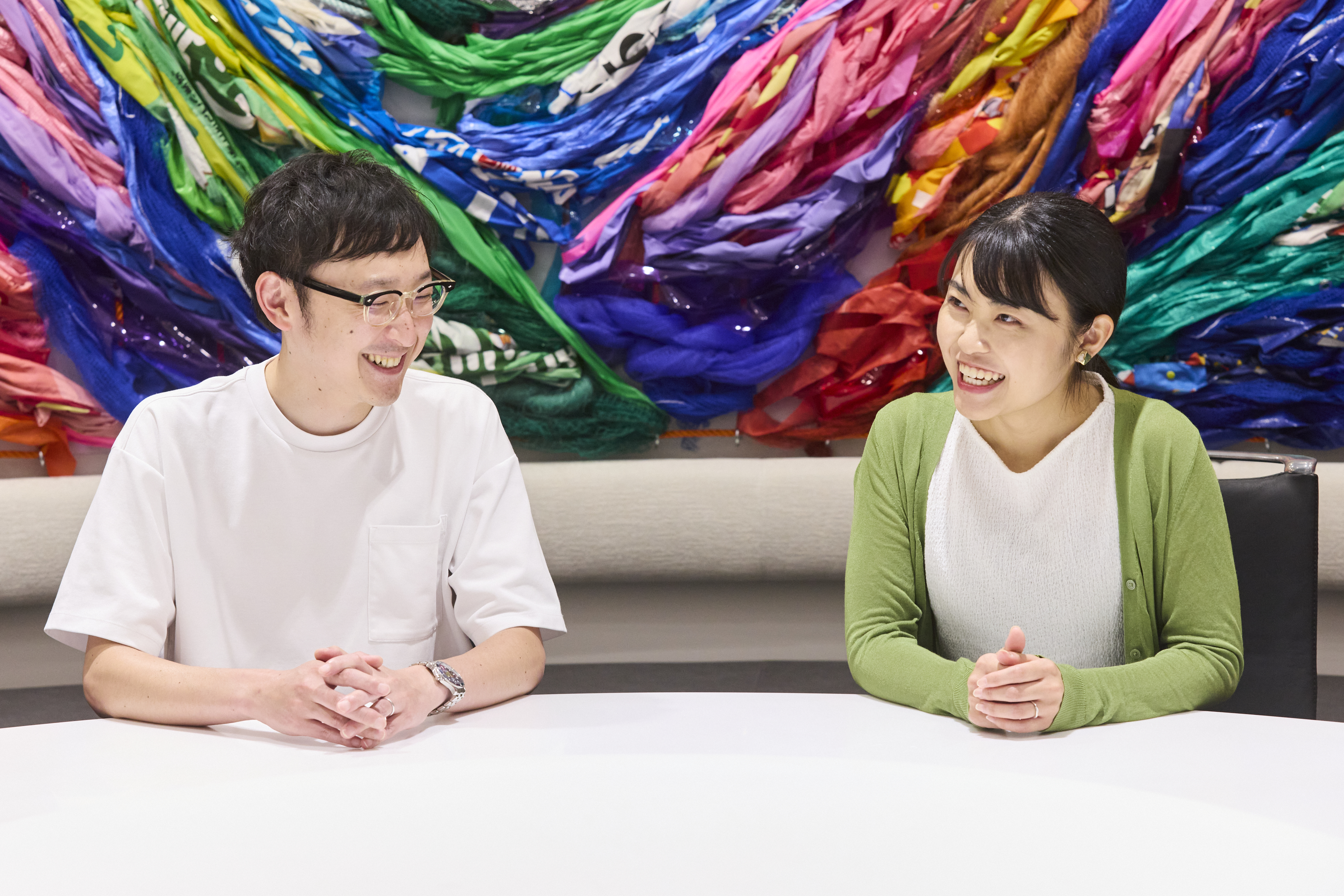
Kota: Everyone believes that the work we do is "good work." That desire to deliver this good work to many people also connects to the business side. There are few silos and rarely is there a sentiment of "That's another department's job." Since there's an atmosphere of cooperating and moving forward together, perhaps those who can adapt to this culture are the kind of talent Viling seeks.
―― It seems Viling also has a culture that supports young people's challenges.
Hinata: That's right. Since I didn't have much experience interacting with children, I told the CEO, "I want to know what it's like in the field," and he gave me the opportunity, saying, "Well, why don't you try doing something with the children?" I have been able to challenge myself with things I want to do, such as planning after-school events for children.
―― Please also share what you find rewarding and appealing about your work.
Hinata: I'm in my fifth year, and starting with sales for "Stem Box," then overseeing the entire business the following year, and then launching "co-mii"—there's constant change, so it's never boring. The appeal is experiencing my own growth.
Kota: Since I'm in sales, I can see the impact in numbers, like how many facilities we introduced our services to and how many children we reached. Knowing that the service I promoted is helping children is rewarding.
―― Finally, please share your future careers and goals.
Hinata: I joined the company because I wanted to balance solving social issues with business, and the work I'm involved in now is close to that ideal. I want to expand this further, and I also want to be involved in launching new businesses in the future.
Kota: While the launch of "co-mii" felt strongly like a team effort, next time, I want to lead a project myself. The experience, including the failures and reflections, was valuable, and I want to use that to create even better products.
.png)