
*This article is a reprint of a tie-up article edited and produced by Mynavi News.
Monex, Inc., an online brokerage committed to "Creating the Future of Finance," continues to take on challenges unbound by convention.
Through collaborations with NTT Docomo and the provision of AI services tailored to customer needs, Monex is not only realizing the next step in the future of finance but is also steadily bringing to life the democratization of investment, allowing everyone to invest freely. Supporting these initiatives is a corporate culture that encourages flexible work styles and continuous challenge. We spoke with Yushi Tanabe and Tetsu Shinohara, who are active on the front lines of new business development and internal transformation, about the background of their respective initiatives and the reality of working at Monex Securities.
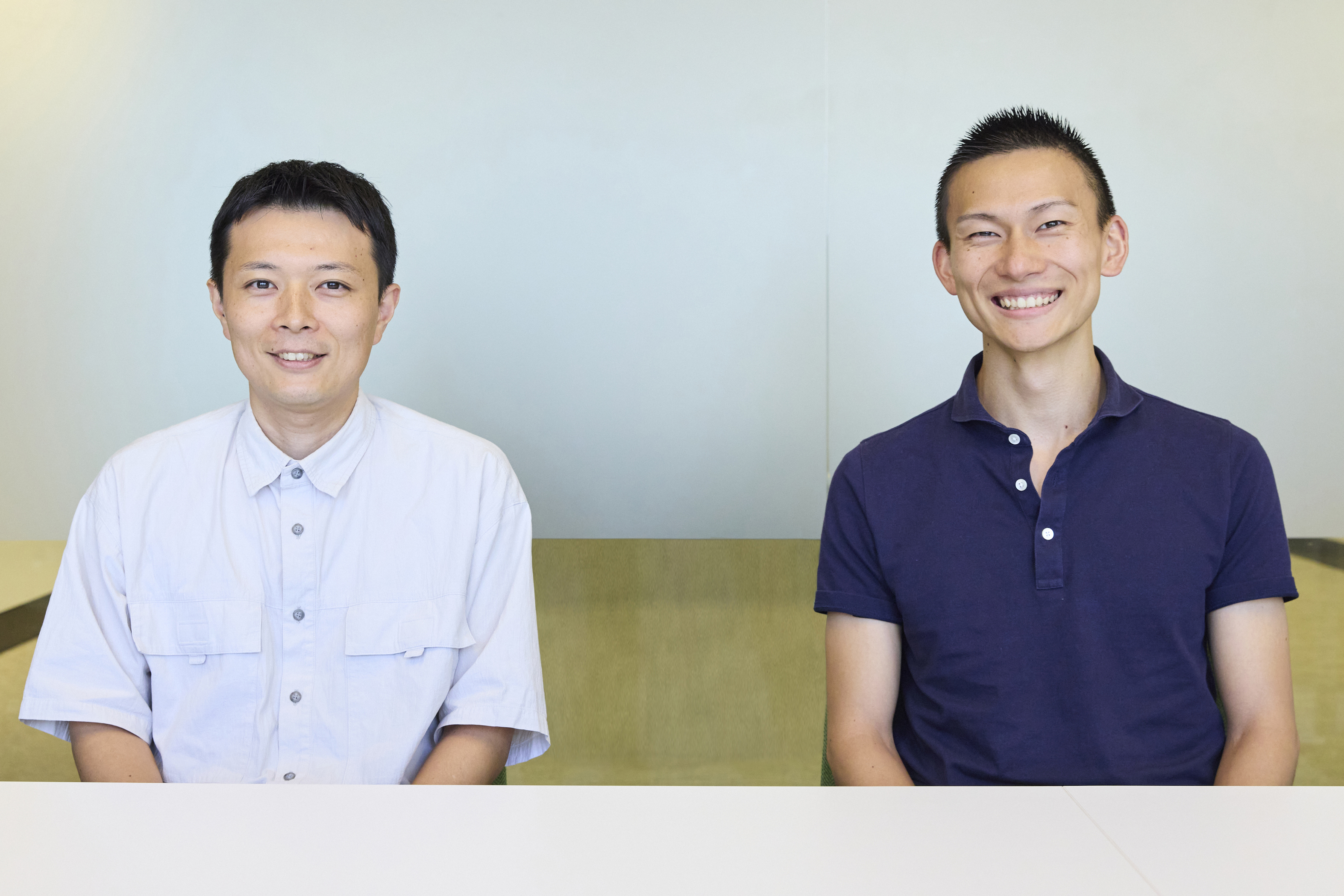
Yushi Tanabe
Growth Strategy Promotion Department
Monex, Inc.
Tetsu Shinohara
Growth Strategy Promotion Dept. /AI Service Promotion Group
Monex, Inc.
Entering the "Point Economy Zone" through Collaboration with NTT Docomo: Accelerating the Democratization of Investment
―― First, please tell us about the democratization of investment that Monex, Inc. is working on.
Yushi: Since online brokerages originally started as a platform for individual investors, the democratization of investment is a major theme for the entire industry. Monex Securities is leading this trend, helping individuals take ownership of their investments. Our collaboration with NTT Docomo is one part of this effort.
Initiatives for "Creating the Future of Finance" through Collaboration
―― Specifically, what kind of initiatives are you undertaking with NTT Docomo?
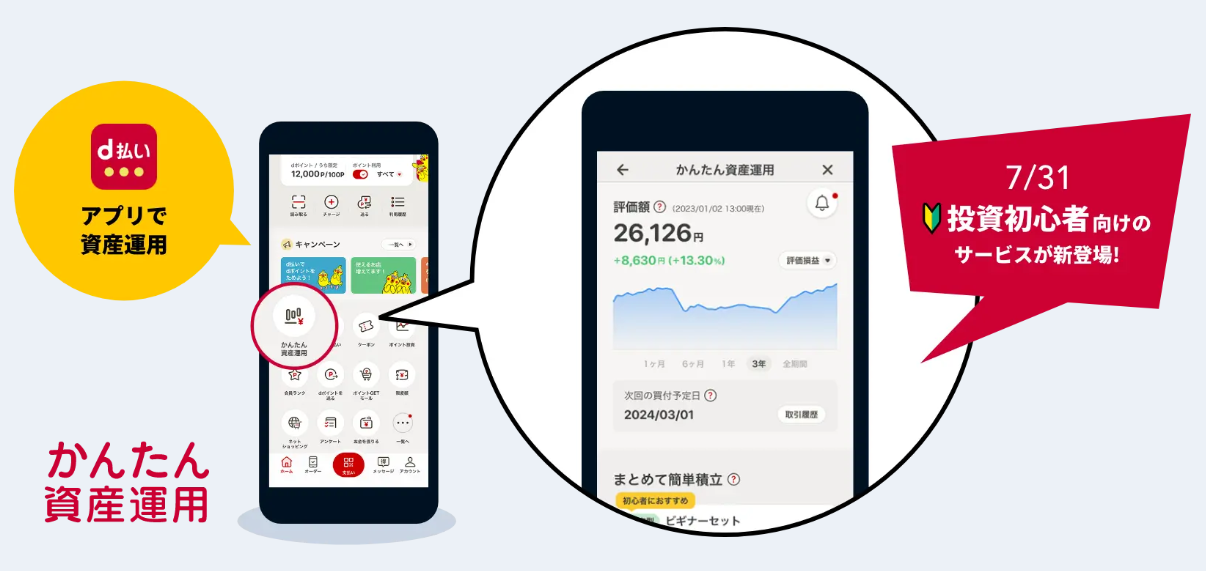
Yushi: We are focusing most on initiatives to encourage people who have never been involved in investing. For example, "d Card Tsumitate" allows users to easily set up credit card-based recurring investments (tsumitate) using a credit card issued by NTT Docomo. We also offer a mechanism where points can be accumulated and used through the linkage of d Account (NTT Docomo’s universal ID) and Monex Securities. Furthermore, we recently launched a service called "Kantan Asset Management" (Simple Asset Management), which allows anyone to easily open a brokerage account and start recurring investments through the d Barai (Docomo's smartphone payment service) app.
―― What was the objective behind the collaboration with NTT Docomo?
Yushi: Financial services, in general, are highly segmented now, offering diverse functions and services. At the same time, finance is becoming more integrated into daily life. A clear example of this is the "Point Economy Zone," which involves where and how to use points accumulated through shopping and other activities. Several large economic zones are currently being formed, and in order to maintain a presence within them, collaboration with a trusted partner was essential. We are truly delighted to have partnered with NTT Docomo.
A Craftsman Spirit Unconstrained by Existing Frameworks: Feeling "Monex-ness" in Collaborations
―― What do you find interesting about collaborating with other companies?
Yushi: I enjoy learning new values as different corporate cultures merge. I was previously assigned to Coincheck, a group company, and the difference in pace and decision-making style was stimulating. For example, Coincheck, with its venture-like corporate climate, featured speedy bottom-up decision-making, while a large company like NTT Docomo has a culture that emphasizes consensus building. Leveraging those differences is the real thrill of collaboration.

Tetsu: I, too, often encounter situations in meetings with people from different industries where the common sense of finance doesn't apply. I find that being exposed to fresh ideas is interesting and very educational. I also feel a sense of fulfillment in the process of creating new value by utilizing the name recognition and service capabilities of other companies—making "1+1 greater than 2."
―― Are there any moments in your initiatives where you feel a distinct "Monex-ness"?
Yushi: I feel "Monex-ness" in the attitude of always moving forward with new ideas, unrestrained by existing frameworks. The securities service industry is heavily regulated, making it difficult to differentiate from competitors. Despite this, Monex Securities has strived to provide valuable information to customers. Take, for example, the Japanese stock analysis tool, "Monex Meigara Scouter." This was born from exhaustively considering what information individual investors would truly want. Creating something that doesn't yet exist but would be considered useful, without being constrained by existing frameworks—I feel that kind of craftsman spirit is our strength.
Tetsu: The strength I feel is that Monex has highly passionate fans among its customers. Customers resonate with Monex's commitment to detail in its services, even without participating in the fee competition with other online brokerages, and they are our foundation. The trust we have built over the 25 years since our founding is, I believe, the strength of Monex Securities.
The New Standard in Finance Created by AI: The Challenge of the AI Service Promotion Office
―― We heard that you launched the AI Service Promotion Office in July 2023. Could you tell us about the background and specific initiatives?
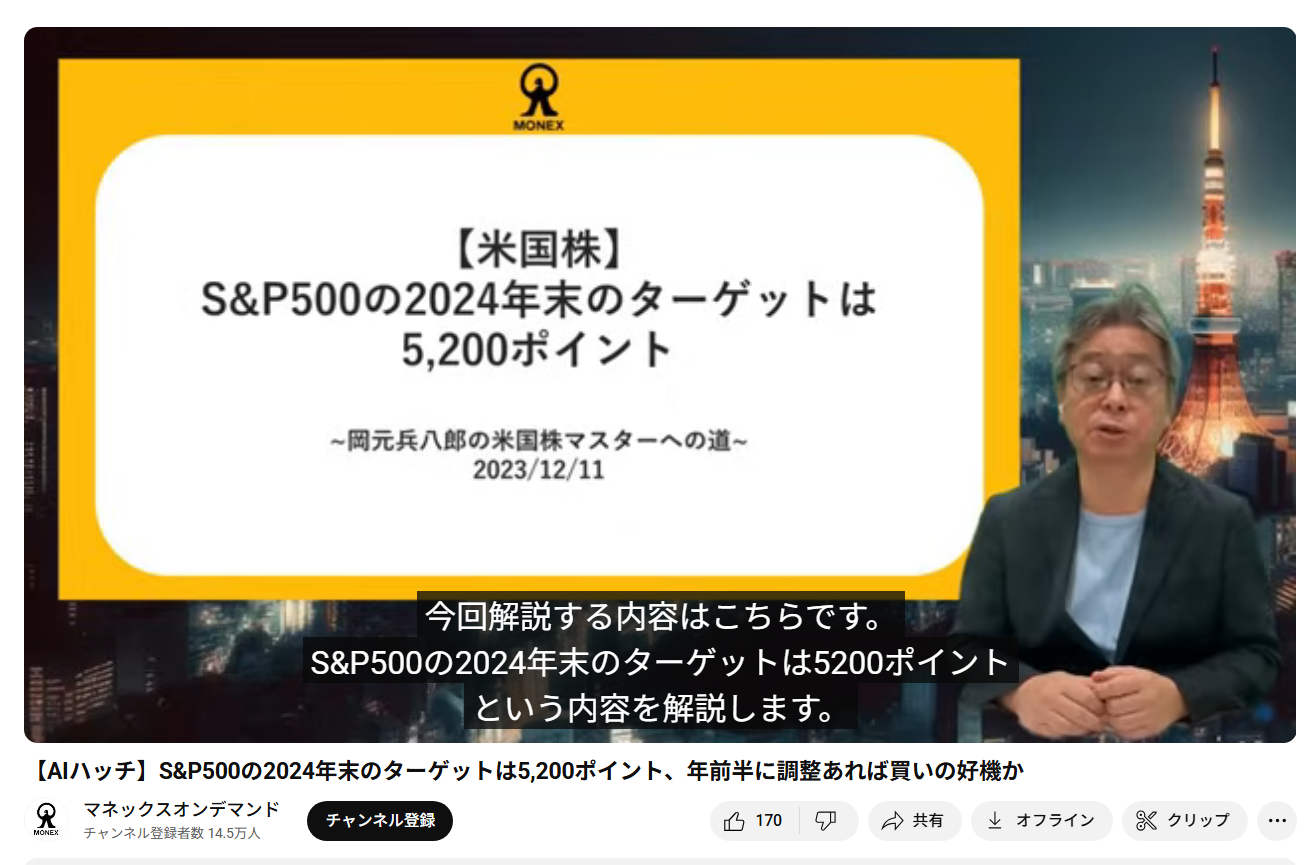
Tetsu: The opportunity arose when Generative AI became a hot topic, and our CEO, Kiyoshi, suggested, "Can we use AI to offer a new customer experience in the areas they directly interact with?" That led to the launch of the AI Service Promotion Office. The primary goal of this department is providing new experiences to customers, rather than just improving operational efficiency. For example, we are developing services that expand the scope of the investment experience, such as stock commentary videos by the AI Avatar Analyst "AI Hatch" and "Monex Assistant (Beta)," which provides stock price information in a chat format.
―― What kind of feedback or changes have you observed since launching AI services like AI Hatch?
Tetsu: We created an avatar of Hachiro Okamoto, our U.S. stock analyst affectionately known as "Hatch." We received many comments from YouTube viewers and seminar attendees, such as, "I thought the avatar was the actual person," and "Is it possible to create such a realistic avatar?" Although we haven't yet seen clear quantitative effects (such as increased trading or revenue), we have received feedback like, "That's a very Monex-like initiative."
―― What challenges do you want to tackle with AI going forward?
Tetsu: The securities industry was once centered around people gathering at exchanges, but the internet completely transformed that. While that is normal now, I believe the next step is that AI has the potential to create an entirely different standard. When that happens, I want to release new services so that people think that Monex is leading the transformation. While many aspects are still difficult to predict concretely, we hope to continue making new proposals in line with the times.
Parental Leave, Remote Work, Flex Time... Monex Securities' Comprehensive Benefits and Work Styles
―― I understand both of you took parental leave. Did your work style or mindset change before and after taking leave?
Yushi: My motivation for work was high before and that hasn't changed. However, I truly realized the importance of spending time with family. After returning, I think my work style became more conscious of private life, such as incorporating telework. I am truly grateful that this is possible thanks to Monex's systems and environment.
Tetsu: Since my child was born, I have shifted to a morning-oriented work style. I want to dedicate the evenings to my family, so, for example, during the hot summer months, I sometimes come to the office before sunrise and go home early. The office is very quiet in the morning, which is ideal for focused work.
―― Are there any aspects of the system or workplace environment that make it easy to work?
Yushi: The flexibility of being able to work from home is a huge factor. While policies differ by department, in the Growth Strategy Promotion Department where I belong, we can freely adjust between working from home and coming to the office. I commute when tasks require a physical presence, but otherwise, there is a high degree of freedom. I can also adjust my commute frequency according to family circumstances, which is very helpful.
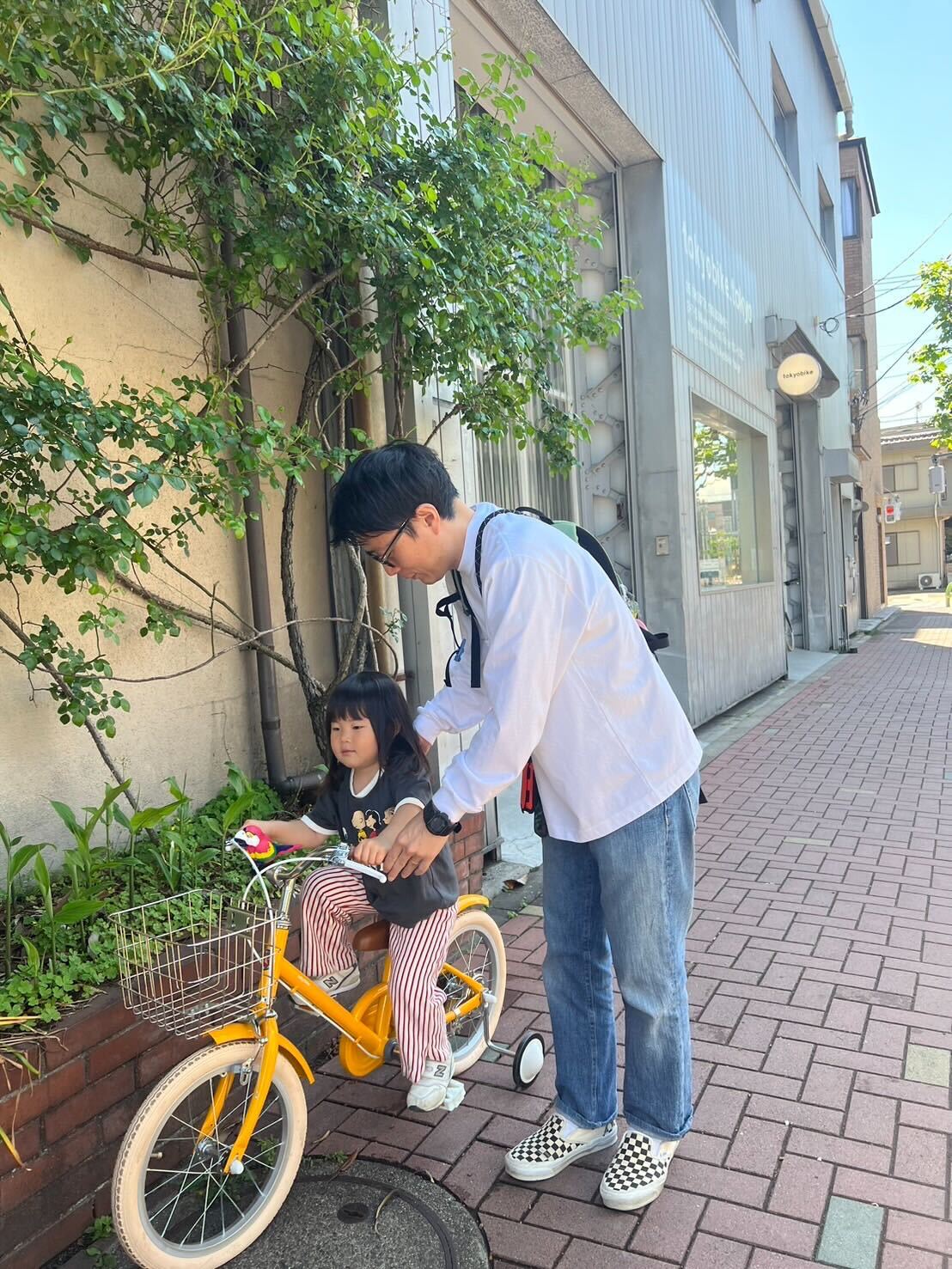
Tetsu: The ability to shift to a morning-oriented work style is thanks to the Flex Time System. Although the core time is set from 11:00 AM to 2:00 PM, I feel it is a system that allows for sufficiently flexible work. Additionally, I work from home about half of the week, so I appreciate having an environment where I can work flexibly.
―― What kind of careers do you both hope to build at Monex, Inc. going forward?
Yushi: I have primarily honed my skills in the digital marketing field, but I now want to be involved in work that moves the direction of the entire company, not just that area. For example, I want to challenge myself more in positions that drive large projects, like the current collaboration with NTT Docomo.
Tetsu: Through my involvement in AI-related initiatives, I feel that a large part of my current job may not require human intervention in 10 years. Technology is evolving that fast. That's why I believe it's important to constantly update my way of working. I want to enhance my value by discerning what only humans can do and flexibly incorporating convenient tools.
The expansion of the scope through collaboration with NTT Docomo, the service design focused on enhancing user experience, and the innovation driven by AI. The "next step in the future of finance" that Monex, Inc. aims for will steadily move forward while changing its form.
.png)