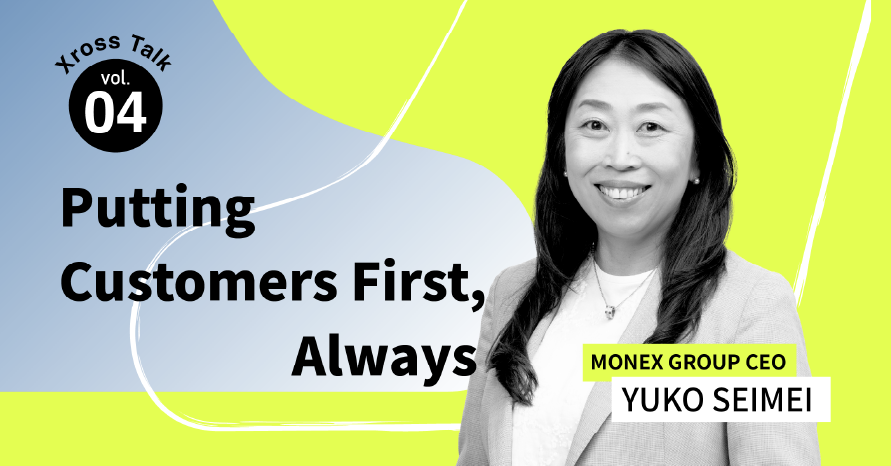
In the 27 years since its founding, Monex Group has evolved dramatically from a pioneering online securities company to a global comprehensive financial group. Despite this growth, the organization continues to maintain its entrepreneurial spirit based on the belief that “markets are something we must create ourselves.” Rather than focusing on short-term competition, the company takes on challenges head-on in its search to determine what is essential for future customers. Even after more than a quarter of a century, Monex Group continues to be a challenger. Xrossing’s Editorial Team speaks with Yuko about the origins of Monex Group’s ongoing evolution.
<Profile>
Entered Sanwa Bank (currently MUFJ Bank) in 2001, moved to MKS Partners in 2006, and joined Monex Hambrecht (currently Monex, Inc.) in 2009. Appointed president and representative director of Monex Hambrecht in 2011; president and representative director of Monex, Inc. in 2019 (now president, member of the board, and executive director since 2024). Was appointed representative executive officer and COO of Monex Group, Inc. in 2020 and representative executive officer, COO, and CFO in 2021. Was also appointed member of the board of Monex Group, Inc. in 2021, and representative executive director, Co-CEO, and CFO of Monex Group, Inc. in 2022. Has served as representative executive officer, president, and CEO of Monex Group, Inc. since June 2023.
― Monex Group has grown significantly since its founding over a quarter of a century ago. Looking back, what would you say are the characteristics that make Monex unique?
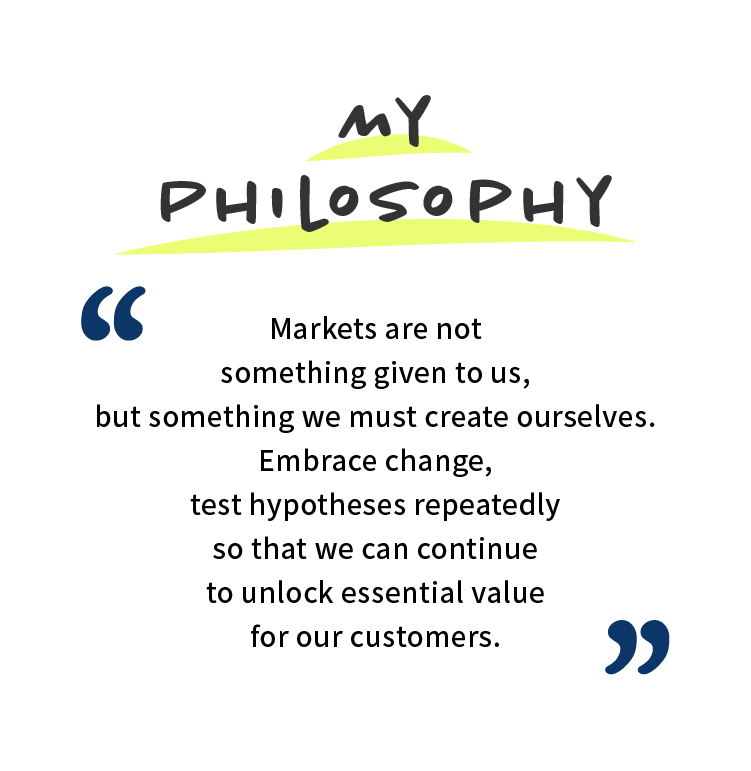
At the heart of Monex is its entrepreneurial spirit. Our thinking that “Markets aren’t given. We create them.” has remained unchanged since our establishment.
In 1999 when we were first founded, Japan did not even have a culture of individuals using the internet to build wealth. Unconstrained by existing rules or conventions, we were able to pioneer a totally new approach to finance for individuals and create new markets on our own. This is our origin.
Now 27 years later, while the size and scope of our Group businesses have grown tremendously, I never want us to lose the entrepreneurial spirit of our founding days.
To this day and across all our businesses, we continue to venture into uncharted territories and create new choices.
The finance and asset management fields in which we operate are growth industries poised for huge strides forward.
In Japan’s securities business, the growing popularity of NISA and changes in the interest-rate environment are creating a structural shift from saving to investing. There is a significant opportunity for growth in moving individual financial assets that currently are in savings and deposits.
At the same time, I see that across the entire Group, our efforts to create new markets ourselves are expanding beyond people’s everyday lives onto the global stage and even beyond the traditional frameworks of finance.
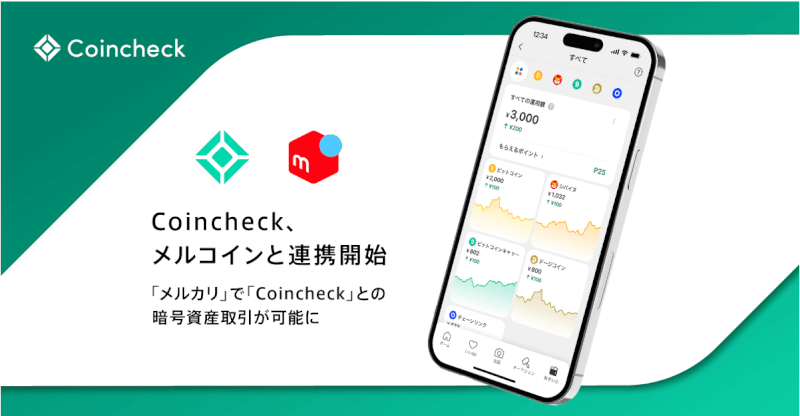
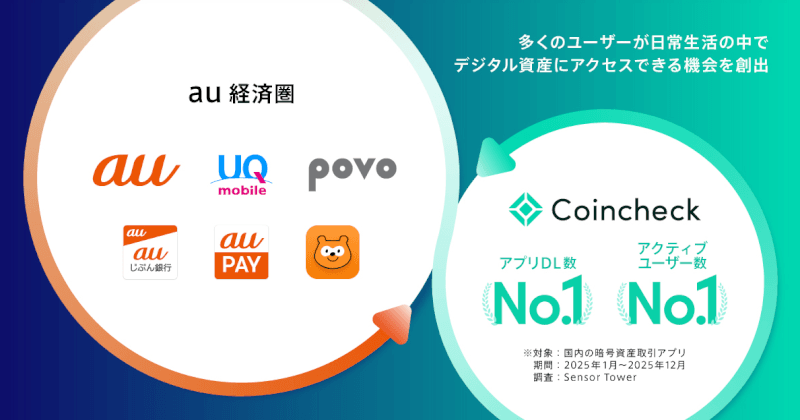
One recent example is Coincheck, one of our Group companies collaboration with Mercoin and KDDI. The partnership with Mercoin has created an environment where users of the flea-market app Mercari can easily trade Bitcoin and a wide range of other crypto assets handled by Coincheck. The partnership with KDDI brings together their extensive telecommunications infrastructure and customer base with Coincheck’s expertise to create a next-generation infrastructure, such as an easy-to-use digital asset wallet that people can use in their daily lives.
We are working to open new frontiers by seamlessly connecting finance with major platforms that are an integral part of people’s lives and enabling people who are unfamiliar with investing or crypto assets to easily access these services.
These efforts are also expanding to partnerships involving national governments and major global institutional investors around the world.
For example, 3iQ, a group company that handles digital asset management, entered a strategic partnership with Gelephu Mindfulness City, a special administrative region in Bhutan. Through this partnership, 3iQ is participating in a highly innovative project managing Bhutan’s Bitcoin reserve assets.
In addition, through a strategic partnership with Further, an institutional investor platform company for an Abu Dhabi sovereign wealth fund, we jointly established a crypto asset hedge fund. With this, we now have the capacity to offer sophisticated crypto asset management solutions to major institutional investors, including sovereign wealth funds and family offices.
As a private-sector player, we are actively creating new markets by opening new doors of finance for individuals as well as by building digital financial infrastructures for national governments and global institutional investors. This reflects our stance to step up to the plate and challenge ourselves to create new markets.
―How do leaders and team members on the front lines maintain an entrepreneurial spirit and create an organization that always takes on challenges?
Any challenge will come with failures. Of course, we need to be able to avoid catastrophic losses. I want all members of the team to understand that taking on challenges that lead to innovation will come with some failures. Those failures should be considered learning opportunities that will lead to future success.
Monex Group was born from a spirit of challenge to transform society. I don’t think we are the type of company that does nothing out of a fear of failure. However, it has been 27 years since our establishment and as our company moves to the next stage, I am deeply concerned that we may unconsciously choose to follow precedents, maintain the status quo and become more defensive.
As I have said before, the world is changing so rapidly. If we choose to just stick to the current way of doing things, our organization will begin to deteriorate immediately. That is why I want us to always maintain our entrepreneurial spirit. I never want to create an atmosphere where people draw boundaries in terms of their territory and refuse to cross them or think that achieving the same level as before is good enough.
I value a healthy sense of ambition and a commitment to see things through to the end. I don’t mean climbing to the top by knocking others down but having the perseverance and passion to keep going through trial and error to achieve our own high goals.
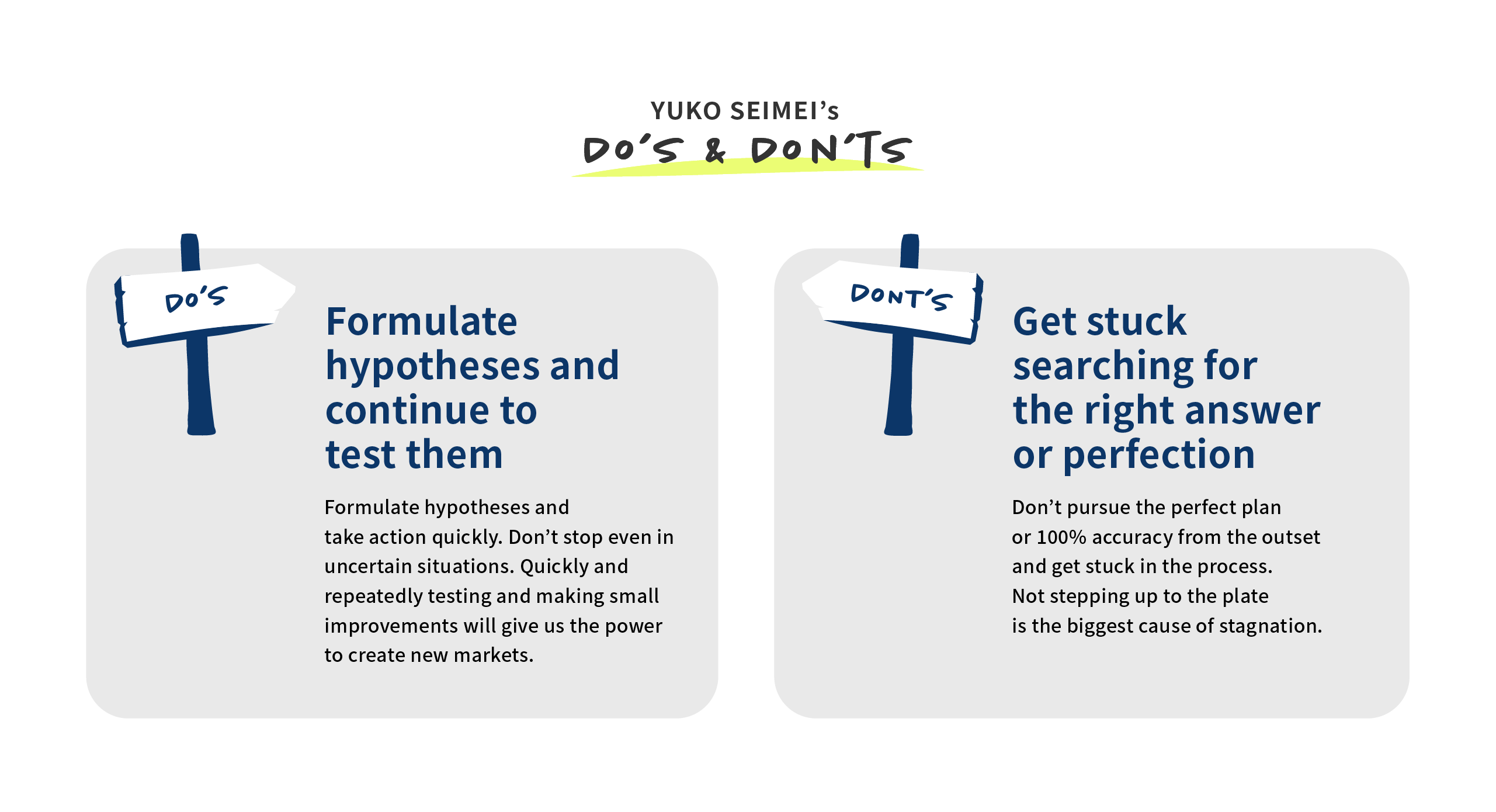
A while ago, a longtime supporter shared his belief that when things do not go right in the process of taking on a challenge, that is not a failure but rather the result of testing one hypothesis. That deeply resonated with me and gave me courage. Even if we cannot immediately achieve the desired outcome, we must quickly change our mindset, consider that the hypothesis was incorrect and step back up to the plate to try the next one.
―In other words, it is important to persevere and continue taking action.
Exactly. The biggest waste would be to create all these simulations in your head and not take any action.
If you set an ambitious goal, you must first take action, even a small one. As you move from one hypothesis to the next, you will encounter unexpected breakthroughs. If more people can nimbly take action even in their day-to-day work, the organization should certainly become more exciting.

―I hear that many PoC (proof-of-concept) projects utilizing AI are being undertaken on the front lines across the entire Group.
Yes, I think it’s wonderful that there is a constant burst of new ideas emerging from the front lines.
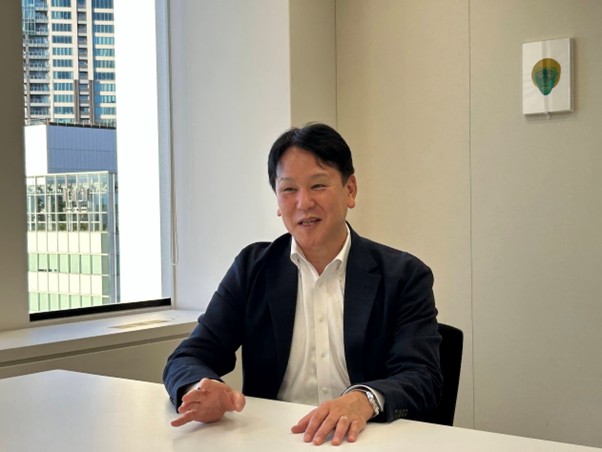
When I visit our U.S. group company TradeStation, which has strengths in advanced trading systems and technologies, I get a strong sense of a deeply rooted culture where ideas are tested and prototypes are made with a free and open spirit.
Currently, Michael Fisch, CTO of TradeStation, is also in charge of promoting AI across all Monex Group companies. His team’s agility and innovative mindset to create new ideas without fear of failure is something that our colleagues in Japan could learn from and incorporate as members of the same Group.

- 拡大
- With Michael Fisch, TradeStation CTO
I never want to smother ideas and passion that emerge from the front lines.
My job is to set management priorities while preserving the free and open culture that brings forth innovation. I welcome trial-and-error efforts on the front lines and work to connect them to added value for our customers as quickly as possible. Steering the course with just the right balance is a rewarding challenge for me now.
―So, you are talking about balancing the freedom to create new ideas with the optimal allocation of management resources.
Yes, exactly. We must not crush the chaos and passion that generate new ideas. But at the same time, a company’s resources are limited, so we must set priorities and focus on things that have value.
What I am aiming for is not an organization with strict controls that nip in the bud new ideas, but rather, an organization that is flexible, able to quickly capture new ideas that spring forward one after another, and determine and prioritize which ideas can give customers value and meet their needs.
We can’t allow change to end as merely change. We must translate that into real value for our customers and opportunities for growth. And I want to make sure we maintain a sense of speed in doing so.
―Does Monex have a unique stance in terms of how it deals with competitor companies?
In a nutshell, we pursue essential value for our customers’ future.
What I try to avoid is becoming overly focused on comparing ourselves with other companies or competing over market share. For example, at TradeStation in the U.S., we don’t compare ourselves with major competitors or fight for a higher ranking in terms of size. We are focused on one thing: What essential value can we provide?
In the Japanese finance industry, there is a tendency to lower commissions and pursue cost strategies when competition intensifies. Of course, business profitability is absolutely necessary, but we don’t want to compete solely on cost. We must always ask ourselves, “What is the true added value we can provide for our customers’ futures?” Our goal is to create a sustainable relationship where we provide real value at a price that customers are willing to pay for.
Our decisions are based not on what other companies are doing, but on what is essential for our current customers now and in the future.
―What are some concrete actions you take to support your commitment to providing essential value to customers?
One is that we never hesitate to invest in and transform areas that we consider critical, even if they are areas that customers do not directly see.
A good example is our decision to develop Monex Securities’ core systems in-house. This was not about adding new functions or making the graphics and customer interface flashy. Instead, we refined the foundation of our systems, and this enabled us to enhance risk management and better protect our customers’ assets. Furthermore, it also enabled us to quickly and flexibly provide new services that our customers truly need.
We did this not because other companies were doing it, but because this was the answer to our fundamental question: What is essential for our customers’ peace of mind and future?
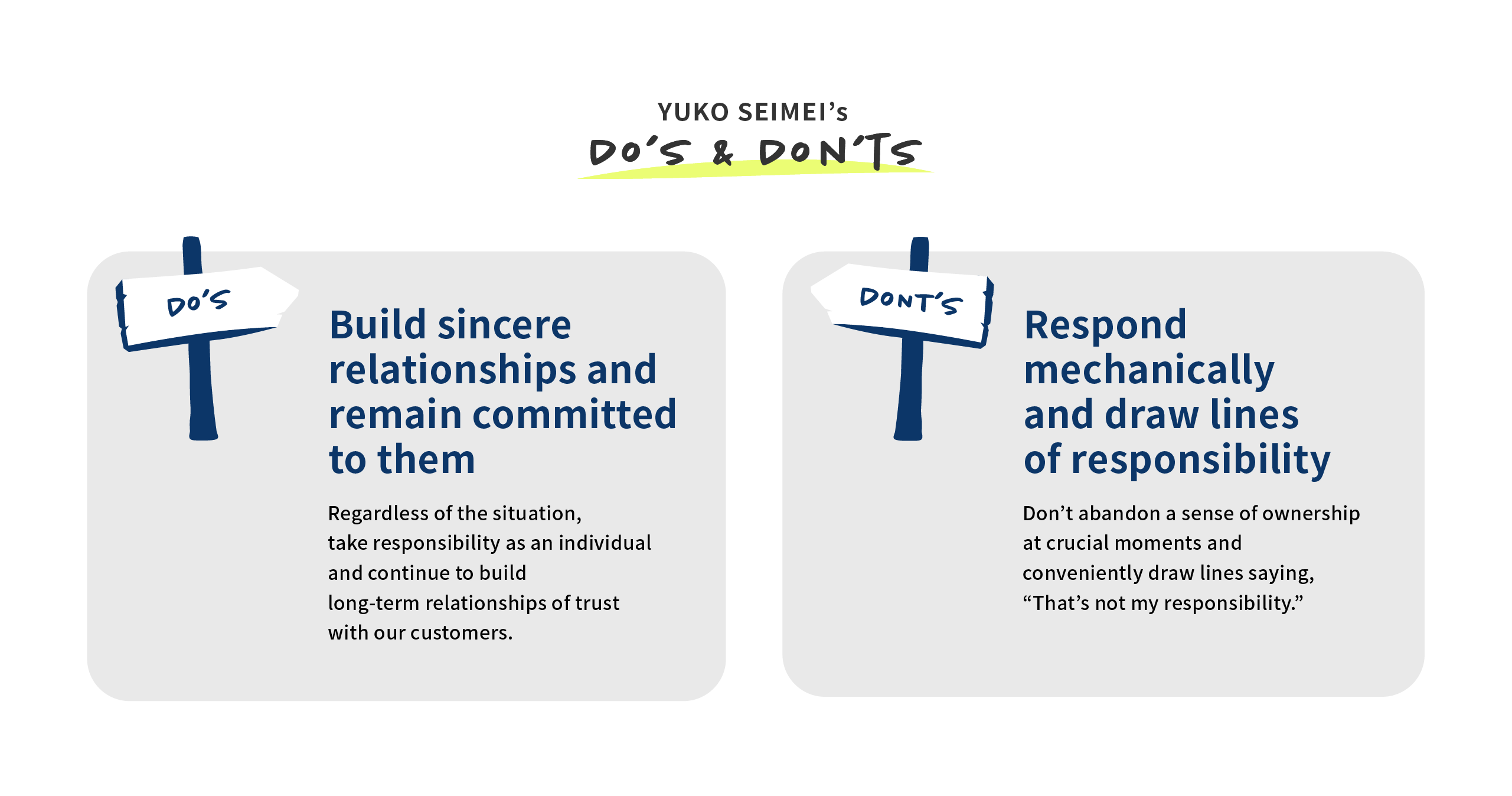
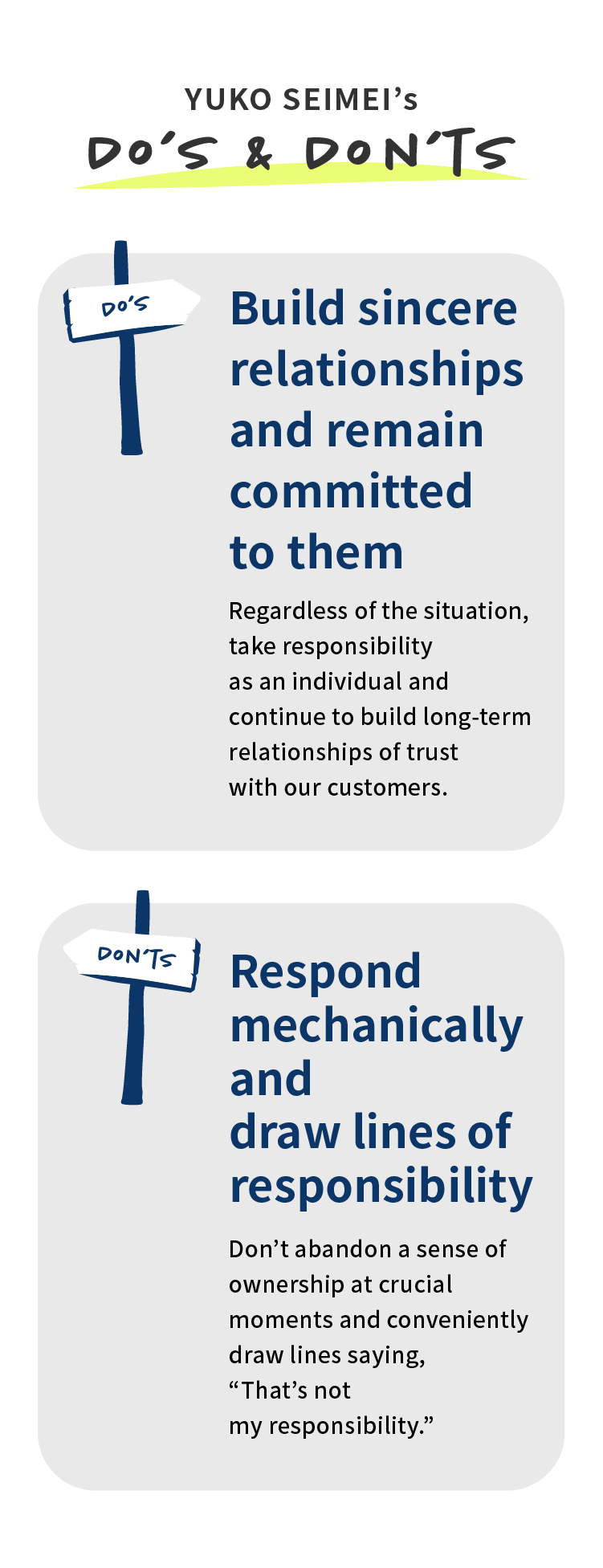
Another is that in our day-to-day communication, we are committed to engaging with our customers as individuals with a sense of sincerity, never running away when things get difficult.
At the Customer Support Center at Monex Securities, responses to all customer e-mail inquiries include not just our company name, but the name of the person who handled the inquiry as well. Since long before the prevalence of AI and chatbots, our Customer Support Center team members have always introduced themselves by name at the beginning of a phone call. We are committed to showing our customers that we take responsibility as living, breathing human beings, not as machines. There are obviously risks involved in giving names and at times, we have gotten harsh feedback. But our insistence on developing human-to-human relationships reflects our strong commitment to take responsibility and never run away regardless of the situation and to build a relationship of trust with our customers based on sincerity and mutual respect.
At Monex, we would never lower the quality of our services because of internal circumstances or to prioritize efficiencies. Coincheck, 3iQ and other companies that joined the Group later also share a similar underlying culture that is focused on the desire to make our customers happy and deliver innovative value.
Even as the organization grows in scale, I believe we can continue to evolve so long as we maintain our spirit of challenge to pursue what is essential.

Xrossing Editorial Team
Together with freelance writer Eriko Miyamoto and our in-house team, we bring you stories about Monex Group today.
Eriko Miyamoto
Joined Nikkei Home Publishing (now Nikkei Business Publications, Inc.) in 2001. After working in the editorial department of magazines including Nikkei WOMAN, she became an independent editor and writer at the end of 2009. She primarily writes about the work philosophies and life stories of people active in a wide range of fields, as well as nonfiction interviews centered on individuals and families. She has been involved in more than 100 books, and has broadened her work to cover media startup initiatives and community management.
Corporate Branding Office
The Corporate Branding Office was established in 2025 to help visualize and structure the Group’s philosophy and values, building long-term brand equity through consistent communications.