Since its founding, Monex Group has continued to grow through repeated transformations. Yuko characterizes her own leadership style as neither a charismatic leader who pulls the organization forward nor a servant leader who supports the team from behind. Rather, she surprisingly describes it as “OKAN” (a term for mom used mainly in western Japan). She goes on to elaborate, ”I want to create an environment where everyone on the team enjoys coming to work,” revealing a warm, people-centric approach. She also wants to nurture a culture where both good news and bad news are quickly shared so that management risks are not overlooked. Xrossing’s Editorial Team speaks with Yuko about the essence of her flexible approach to building an organization where people are at the center.
<Profile >
Entered Sanwa Bank (currently MUFJ Bank) in 2001, moved to MKS Partners in 2006, and joined Monex Hambrecht (currently Monex, Inc.) in 2009. Appointed president and representative director of Monex Hambrecht in 2011; president and representative director of Monex, Inc. in 2019 (now president, member of the board, and executive director since 2024). Was appointed representative executive officer and COO of Monex Group, Inc. in 2020 and representative executive officer, COO, and CFO in 2021. Was also appointed member of the board of Monex Group, Inc. in 2021, and representative executive director, Co-CEO, and CFO of Monex Group, Inc. in 2022. Has served as representative executive officer, president, and CEO of Monex Group, Inc. since June 2023.
― There are many types of leadership styles among top management who lead their organizations. How would you describe your leadership style?
I don’t think I am the type who pulls an organization forward through visionary leadership. Of course, I make decisions on my own and I have a clear idea of what kind of future I want to create, but I don’t see myself standing at the front and telling everyone what to do and how to do it. On the other hand, I don’t consider myself a servant type of leader, in other words, someone who brings together an organization through followership (support), either. Actually, until I became CEO, I thought I might be a servant type, but once I took on the role, I realized that wasn’t quite me.
Of course, I am very serious about setting ambitious goals for the organization and taking a top-down approach in putting the structures and systems in place to achieve them. I think these are essential for management.
However, I have no desire to be the main player and showcase my individual achievements. What is most important for me is to maximize the organization’s output by creating an environment where everyone I work with feels comfortable and can fully unleash their capabilities. I believe we can achieve the highest goals when all members of the team are able to pour their energy into their work in a positive manner. Maybe that is why I consider myself to be a “neighborhood mom” with an OKAN type of leadership style.
― An OKAN type of leadership, that’s certainly a unique expression.
Someone I appeared with at a speaking engagement once told me , “You’re like an OKAN.” I laughed and thought, “Yes, that makes a lot of sense.”
When people think of neighborhood moms, they might imagine an outgoing, warm-hearted mom. . I am from the Kansai (western) region of Japan, and my mother was a prototypical Osaka neighborhood mom. She would frequently invite the neighborhood kids for meals or take us to amusement parks on days off. We were not rich in any sense of the word, but my mother loved seeing children’s smiling faces and had a strong desire to enrich the local community.
She did not engage with each child in the same way, but rather, enjoyed each child’s individuality and tried to help them develop it further. On the other hand, because she was always busy multitasking housework and her job, she also naturally expected them to be independent and would often say, “Take care of your own things.” While this is not a leadership style you would find in a business textbook, for me, it is the most familiar and greatest example of leadership and one that comes naturally to me.
Now as I manage the company, I see that I share many similarities with my mother.
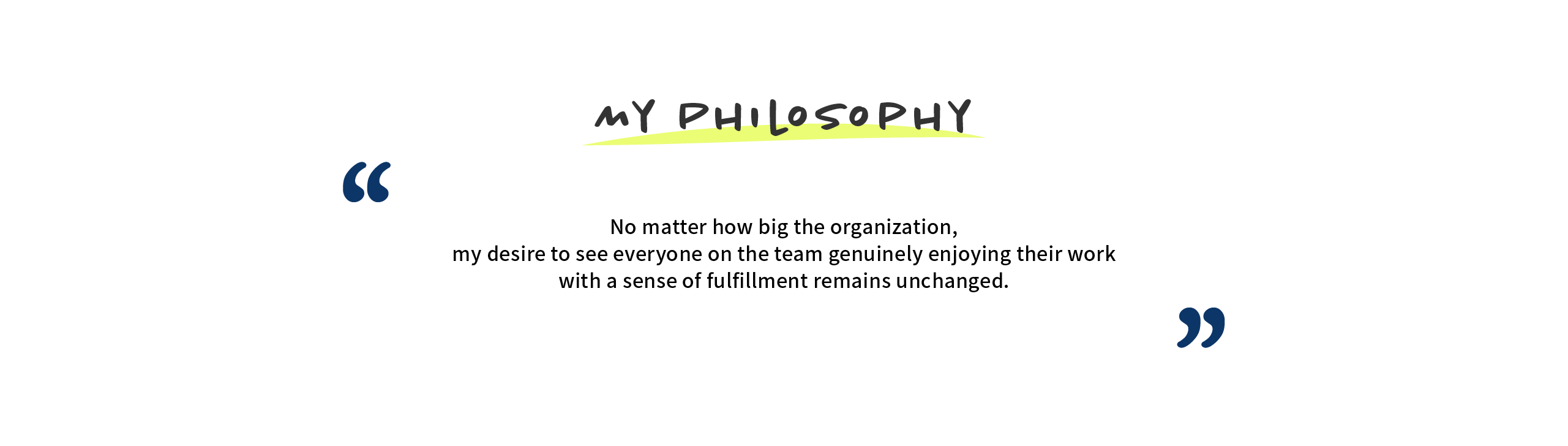
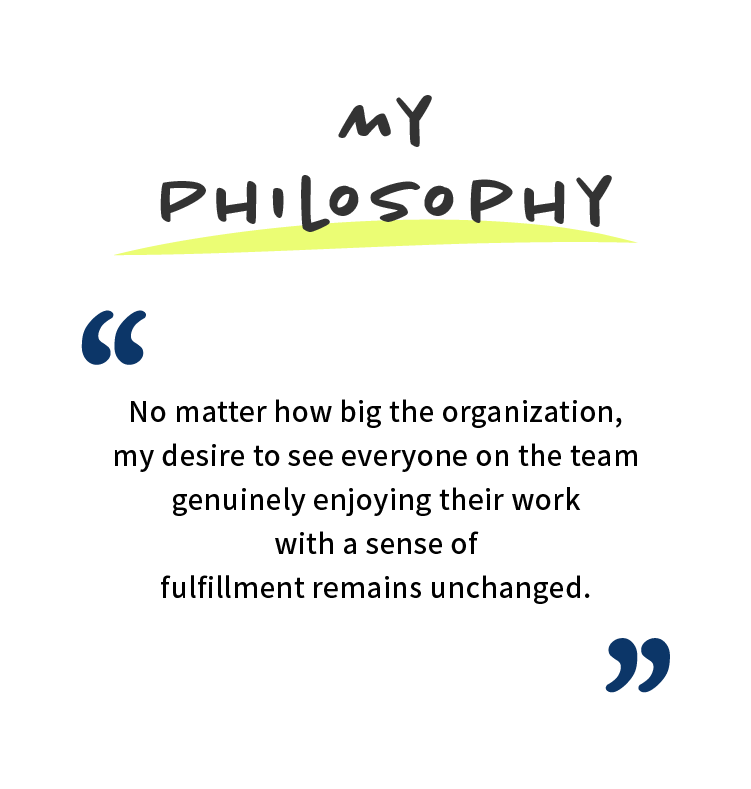
Over the years as I built my career, the size of the organizations I led grew. But no matter how large the organization, my desire to see everyone on the team genuinely enjoying their work with a sense of fulfillment has not changed.
For example, I hope that when employees go home and sit at the dinner table, they share with their families what they enjoyed doing that day, or when they meet up with a friend they haven’t seen in a while, they proudly say that they work for Monex Group. My responsibility as CEO is to create an environment where that happens often.
While growing the company is important, I place great importance on shaping the atmosphere and character of the company. A company where many people can articulate how they want to “BE” rather than simply talking about what they “DO” is one that is filled with positive energy that in turn, leads to stronger performance.

― What does your OKAN type of leadership look like in terms of specific thinking and actions?
When I think about it more carefully, this expression sits well with me because it hits home on several points.
The first is that I try to pay close attention to each individual. Whether raising a child or building a team, you can’t treat everyone the same way. You always have to observe and consider, “What are this child’s strengths?” and “How can I bring out this person’s individuality?”
The second is that I like to look out for people—sometimes perhaps a little too much— just like my own mother. For example, when some unruly classmates would loiter in front of a local convenience store, my mom would have no problem saying, “Hey kids, you shouldn’t be loitering here like that!” as she walked past them. At the time, I was embarrassed and pleaded for her to stop (laughs). Regardless of who they were, she could not pretend she didn’t notice and leave things be.
The third is I am able to say what needs to be said. When someone is doing something wrong, my mom could be very direct and say, “Don’t you think that’s wrong?” or “You can do better than that.” That’s because she believed in that person’s potential.
― So, an OKAN type of leader is involved but not just nagging all the time.
Precisely. That is why my fourth point is to ultimately let people do things themselves. I encourage them with a “You can do it, so just give it a go!” A mother is busy with work and household responsibilities therefore can’t be overprotective and do everything for everyone. In the end, she just has to say, “I trust you, so I’ll leave the rest to you.”
The fifth point is not abandoning someone if they fail. In a family, just because someone makes a mistake, the relationship isn’t over. In the end, you might have to say, “Good grief! What was that about?” and patiently wait until they get back on their feet.
Paying attention to people and not leaving them alone, but at the same time, never spoiling them. Watching over them with tolerance and acceptance. Trusting them and allowing them to take responsibility. This OKAN way of interacting with people comes most naturally to me as my leadership style.
Although the term may sound gendered, this leadership style is not about gender. There are many male leaders who practice a motherly type of leadership by nurturing their teams with a sense of acceptance and firmness.
― Although you are the CEO, I see that you are very approachable and take an equal stance with all members of the company. In your day-to-day communication with people, what do you try to keep in mind?
Hmm, part of my character may be that when I notice a change in someone close, I can’t ignore it.
If a member of my team who I talk with regularly seems a bit depressed, I get a little concerned and approach them with a, “Let’s grab a cup of coffee and chat.”
I don’t think about my position, and I really am just inviting them for a casual chat, but the other person is often surprised and shows up armed with a pen and paper (laughs). I observe them while having an idle conversation, and sometimes I say, “I hope there’s nothing, but please let me know if something is bothering you either at or outside of work.” Often times, there is an issue, and that allows me to take action to address it.
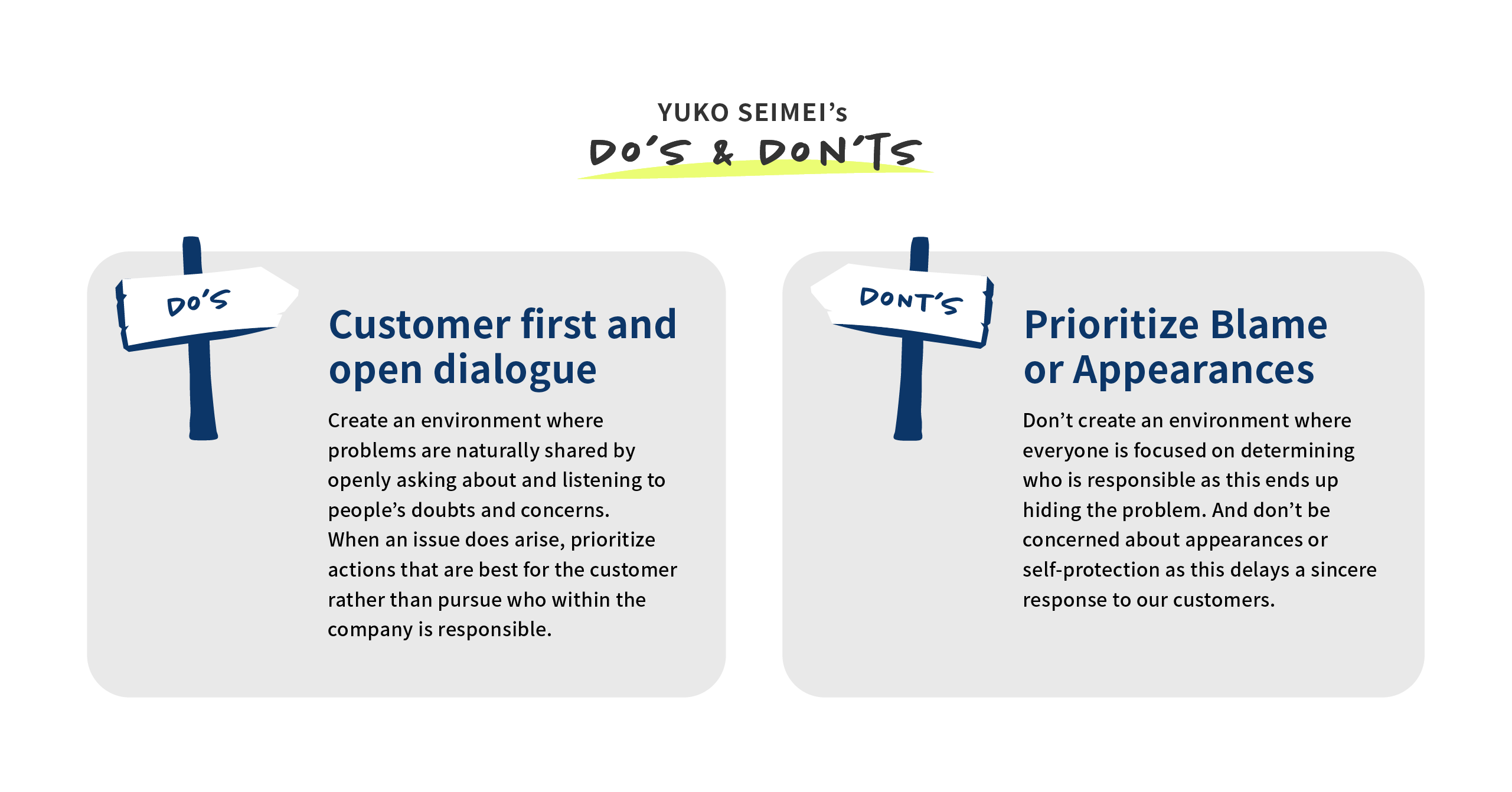
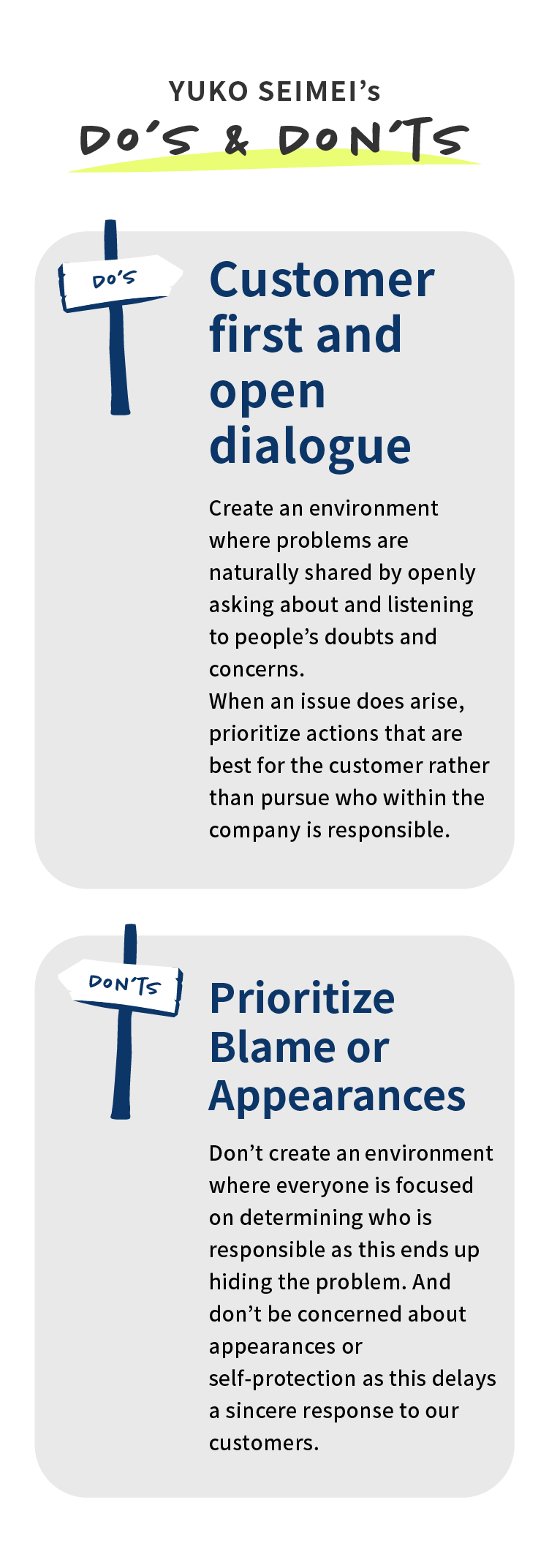
If I pretended not to notice and didn’t approach them, the problem would remain invisible. Some leaders may not want to increase the number of problems they have to deal with. Indeed, the more attention you pay to people, the more problems will come to light. But I actually welcome it when problems are discovered early.
Whenever you have a large group of people working together to achieve something, problems are naturally going to occur. Don’t you think it would be strange if they didn’t? When you take a genuine interest in people, you will quickly notice changes, even if they are small. My attitude is that that’s just the way things are.
What is actually scary is when problems are made invisible.
The golden rule in risk management is to identify a problem as soon as possible. Generally speaking, in an organization, the reporting line is hierarchical and the higher up you go, the more difficult it becomes to see the problem. For a company like ours in the finance industry, which has huge societal responsibilities, I think this is something we need to pay particular attention to.
That is why I very consciously try to obtain information with as few biases as possible. In my everyday interactions, I proactively ask people about things that I am concerned about or don’t understand so that people find it easy to approach me even if the news is bad. Making difficult information or problems an extension of everyday chats and conversations will help bring them to my attention more quickly and smoothly.
And the one principle that I never waver from when hearing difficult news is our “Customer First” stance. The very first thing I think of is not who is responsible, but how to minimize any impact this may have on our customers. Immediately discussing who within the company was at fault does nothing to help our customers.
Of course, once the situation is under control, we have to thoroughly investigate the cause to prevent it from happening again. But in the midst of a problem, our first priority is to do our best for our customers. As a finance company that is part of the societal infrastructure, this is the sincerest approach we can take.
I am also very particular about using the phrase, “tell me” rather than “report to me.”
When you say, “report to me,” people tend to think that they need to prepare a nicely organized report, which may lead to problems being glossed over. To make proper management decisions, I have to grasp the issue with as few filters or biases as possible, so that is why I ask people to “tell me what happened just the way it happened,” rather than “report to me.”
To become the type of manager who can obtain information from team members at any time, I believe managers themselves must take on a communication style where they regularly share what is happening with their team and listen to the opinions of others.
Before asking team members to report on what they accomplished during the week, managers should try to create an atmosphere where everyone feels comfortable sharing their opinions by saying something like, “Yesterday, I spoke with so-and-so and found what she had to say very interesting. What do you all think?”
I want to continue to create a culture across the entire Group where information is quickly shared, whether it be good news or bad news.
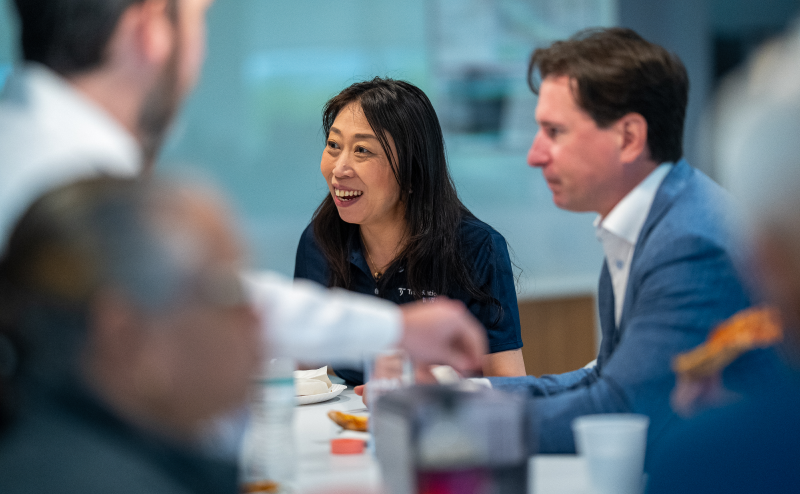
- 拡大
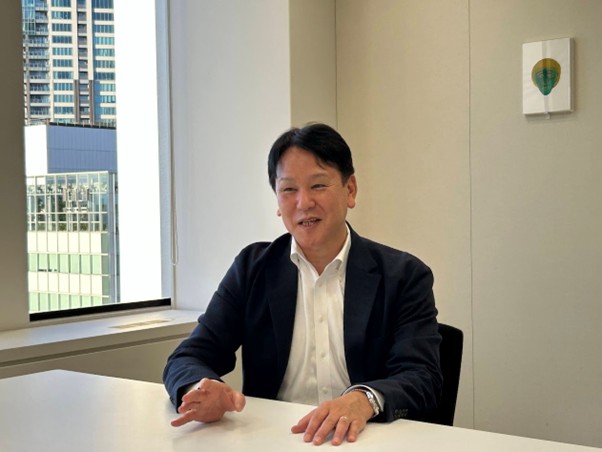
- Yuko in conversation with TradeStation employees
Xrossing Editorial Team
Together with freelance writer Eriko Miyamoto and our in-house team, we bring you stories about Monex Group today.
Eriko Miyamoto
Joined Nikkei Home Publishing (now Nikkei Business Publications, Inc.) in 2001. After working in the editorial department of magazines including Nikkei WOMAN, she became an independent editor and writer at the end of 2009. She primarily writes about the work philosophies and life stories of people active in a wide range of fields, as well as nonfiction interviews centered on individuals and families. She has been involved in more than 100 books, and has broadened her work to cover media startup initiatives and community management.
Corporate Branding Office
The Corporate Branding Office was established in 2025 to help visualize and structure the Group’s philosophy and values, building long-term brand equity through consistent communications.