"A company exists because of its people."
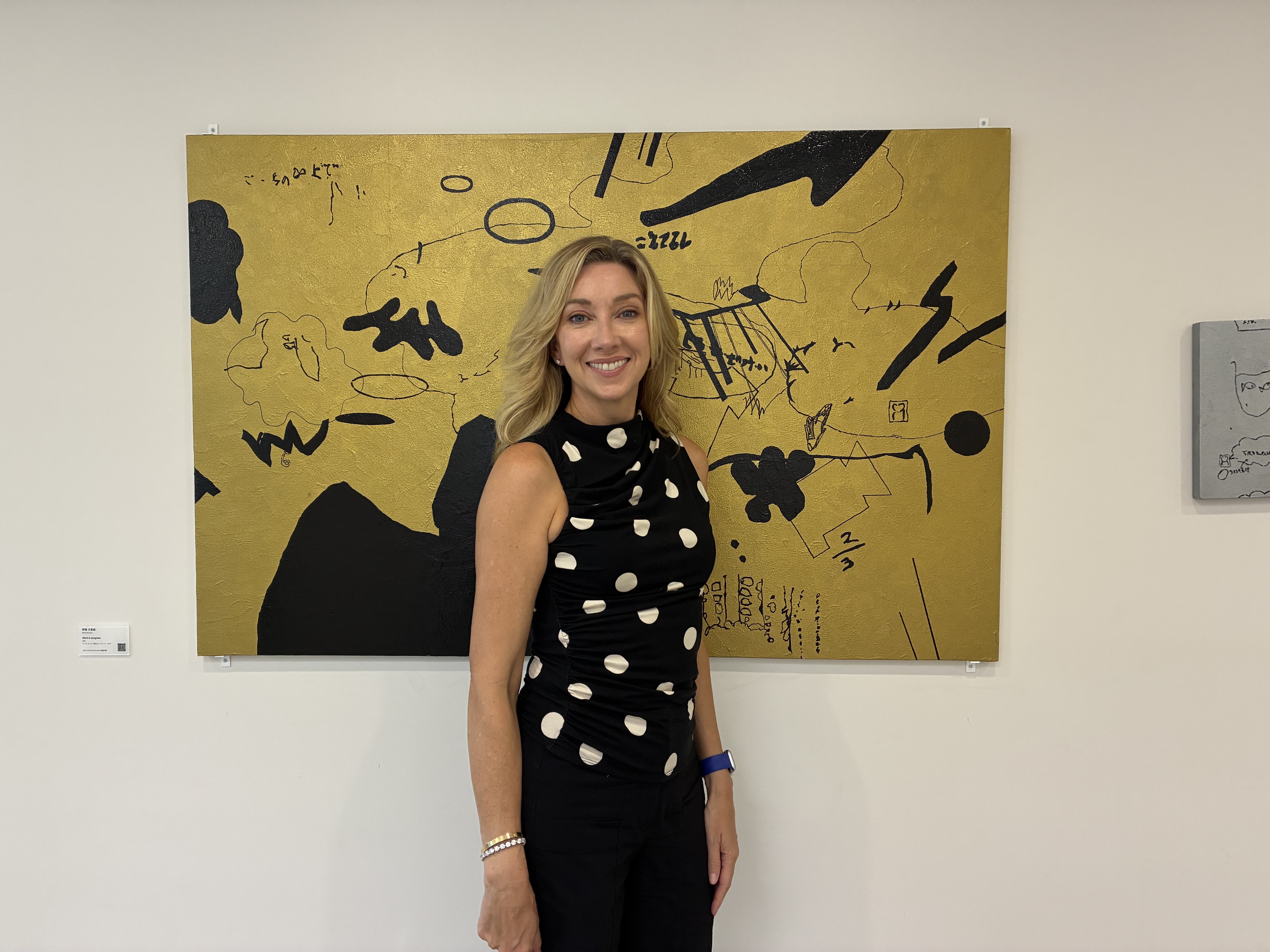
That simple belief has shaped Jessica Pione's career in Human Resources for more than two decades.Today, as Chief Human Resources Officer (CHRO) at TradeStation, Jessica leads the company's people strategy at a time when AI is reshaping workplaces and the pace of change has never been greater. Yet amid rapid technological advances and evolving ways of working, one principle has remained constant throughout her career: putting people at the center.
"HR is a profession that changes every year. AI continues to evolve, legislation changes constantly, and new challenges emerge all the time. That's why we always have to look ahead—to protect the company while creating a better place to work for our employees."
Now in her thirteenth year at TradeStation, Jessica has spent her entire career in Human Resources and currently oversees the company's HR function. We spoke with her about the experiences that shaped her career, how HR continues to evolve in an era of constant change, and the values she believes unite companies across the Monex Group.

Jessica's career did not begin where she expected it would.Originally planning to attend law school, she accepted a temporary position simply to support herself while preparing for the next stage of her career. Instead, that opportunity introduced her to a profession she had never imagined pursuing.
"I thought it was going to be a temporary position. But the HR Director I worked with took me under her wing and said, 'I'd like to teach you about HR.'"
That conversation changed the course of her career.Her first responsibilities were in employee benefits and payroll. Over time, however, the role became much more than administering programs or managing policies. It brought her face to face with employees navigating some of the most difficult moments in their lives.
"When you work in benefits, you become part of people's lives. Sometimes employees are going through a health crisis or other personal challenges, and they're looking to you for support."
Those experiences gradually transformed the way she viewed Human Resources.Rather than seeing HR simply as a business function, she discovered a profession built around supporting people—helping them navigate difficult moments while enabling them to thrive both personally and professionally.
"As I experienced those moments, I realized how rewarding it was to help people. That's when I knew this was the career I wanted to build."
Throughout her career, Jessica was fortunate to learn from two exceptional mentors who believed in her potential and encouraged her growth.
"I was incredibly fortunate. I had two remarkable leaders who supported my development and encouraged me throughout my career."
With their guidance, she steadily built her experience, progressing from Director of Human Resources to Vice President of Human Resources before becoming CHRO.
Looking back, Jessica believes those experiences continue to shape her leadership today.Having benefited from leaders who invested in her growth, she now sees it as her responsibility to create opportunities for others to succeed.
Supporting people is no longer simply part of her role—it has become the philosophy that defines her leadership.
When Jessica reflects on the evolution of Human Resources, one word comes up repeatedly:Change.
"The world never stands still. New technologies emerge, regulations evolve, and the pace of change is incredibly fast. HR has to evolve with it."
Among the biggest transformations she has witnessed are the rise of artificial intelligence and the widespread adoption of remote work. As organizations moved away from face-to-face interactions, recruitment and onboarding required an entirely new approach.
For TradeStation, that meant redesigning hiring processes to strengthen both security and trust in a digital-first environment.
"We've built verification and screening into hiring as a standard part of how we operate, not as an exception. Protecting the company and creating a better workplace for our employees are two sides of the same objective."
Adapting to change also means doing so across borders. HR's purview now spans multiple jurisdictions, supporting TradeStation's operations and continued expansion across the Americas and Europe — each with its own regulatory environment and labor practices.
AI is also reshaping how organizations evaluate talent. As candidates increasingly use AI to prepare resumes and interview responses, Jessica believes hiring managers must look beyond polished answers and explore candidates' experiences, behaviors, and judgment more deeply.
"We're going to need interviews that go much deeper into people's actual experiences and behaviors. We'll also need to think more carefully about the questions we ask."
Jessica's involvement with AI extends well beyond hiring. As TradeStation adopts AI more broadly, HR has taken a role in governing how those tools are used in decisions that affect employees — from evaluation to development — ensuring that adoption moves quickly without outpacing fairness or regulatory obligation.
"AI in the workplace isn't only a technology question. Someone has to set the guardrails and stay accountable for how these tools affect people's careers, and that's a responsibility HR also has to own."
Technology will continue to transform the workplace, but Jessica believes the essence of Human Resources remains unchanged. Technology can strengthen the process, but it is people who ultimately exercise judgment, make decisions, and build trust. For Jessica, that balance—embracing innovation while remaining deeply human—is what defines modern HR.
As remote work has become part of everyday life at TradeStation, another important challenge has emerged: how to foster meaningful connections among employees. For Jessica, the answer goes far beyond introducing new systems or policies.
"When people work remotely, they can easily begin to feel isolated. That's why managers need to stay connected with their employees and make time for regular one-on-one conversations."
This philosophy is reflected throughout TradeStation's approach to people development. The company invests in leadership development, executive coaching, structured training for newly promoted managers, and a formal succession planning framework for its most critical roles — programs designed not only to support individuals but to strengthen the organization's leadership bench for the long term. In TradeStation's most recent culture survey, completed by 263 employees, development and mentorship programs ranked among the highest-scoring areas, contributing to an overall workplace culture score of 4.15 out of 5.0.
"Managers shouldn't have to solve every challenge alone. HR works alongside them, helping them support their people and navigate difficult situations."
Jessica also believes that culture is strengthened when employees have opportunities to learn from and support one another. Employee Resource Groups (ERGs) have become an important part of that effort. TradeStation currently has four employee-led ERGs—Women in FinTech, Black ERG, Chess Club, and Markets and Trading ERG. While each group has its own purpose, they all share a common goal: creating opportunities for employees to connect beyond their day-to-day roles.
"ERGs are much more than events. They're places where people connect, learn from one another, and support each other. We've seen a positive impact on employee engagement."
Jessica is equally enthusiastic about TradeStation's mentorship program, which uses AI to match mentors and mentees based on their backgrounds and interests.
"It's incredibly important for new employees to have someone they can turn to. Having a mentor helps people settle into the company more quickly and find where they belong."
Beyond formal programs, TradeStation also creates opportunities for employees to build relationships in more informal ways—from Happy Hours and Office Days to Holiday Parties and Lunch & Learn sessions.
"One Zoom meeting isn't enough to build relationships. That's why we continue looking for different ways to bring people together."
For Jessica, every initiative ultimately comes back to one thing: helping people feel connected. Because when people feel connected, trust grows—and organizations grow with it.
When asked what defines TradeStation's culture, Jessica pointed to the company's Fundamentals—the shared principles that guide everyday behavior across the organization.
Although the number of Fundamentals was recently streamlined from twenty-six to twelve, she believes the spirit behind them remains exactly the same.
"Culture is built through everyday actions. Healthy differences of opinion are important, and organizations become stronger when people bring different perspectives."
Those words resonate strongly with the values shared across the Monex Group.
Challenge. Trust. Diversity. Fairness.
While each Group company has its own unique culture, Jessica sees those values reflected across the organization.She also believes it is meaningful that the Group has remained committed to sustainability and DEI, even as the external environment continues to change.
"In today's environment, some companies are rethinking their sustainability and DEI initiatives. Knowing that these values continue to be embraced across the Group is incredibly reassuring for employees."
Looking ahead, Jessica believes there is even greater potential to learn from one another.
"There are so many talented leaders across the Group. If we spend more time learning from one another and working together, I truly believe we can create even greater value together."
Respecting the unique strengths of each company while deepening collaboration across the Group—that is how Jessica believes lasting value can be created.
When asked why she has chosen to build her career at TradeStation, Jessica smiled before answering.
"I like the people here."
It was a simple answer, yet it captured the message she had returned to throughout our conversation. She continued:
"Compensation and benefits matter, of course. But what matters even more is having a culture that genuinely values people. People care about one another here. When someone needs help, others naturally step in to support them."
For Jessica, leadership is ultimately about creating an environment where employees feel supported and can do their best work.
"Leaders are responsible for creating a workplace where people feel comfortable and supported. Flexibility matters. Work-life balance matters. And above all, taking genuine care of each individual matters. Those everyday actions are what create a strong culture."
Culture is never created by policies alone.It is built through everyday conversations, mutual trust, continuous learning, and countless small moments of support.When employees genuinely feel that they are valued, organizations become places where people choose to grow, contribute, and stay.
Throughout our conversation with Jessica, one message remained constant.No matter how quickly technology evolves or how dramatically the workplace changes, lasting organizational value begins—and continues—with people.That belief lies at the heart of TradeStation's culture and reflects the values shared across the Monex Group.In a time of constant change, organizations that never lose sight of people will continue creating new value—for their employees, for their customers, and for society.
July 2026